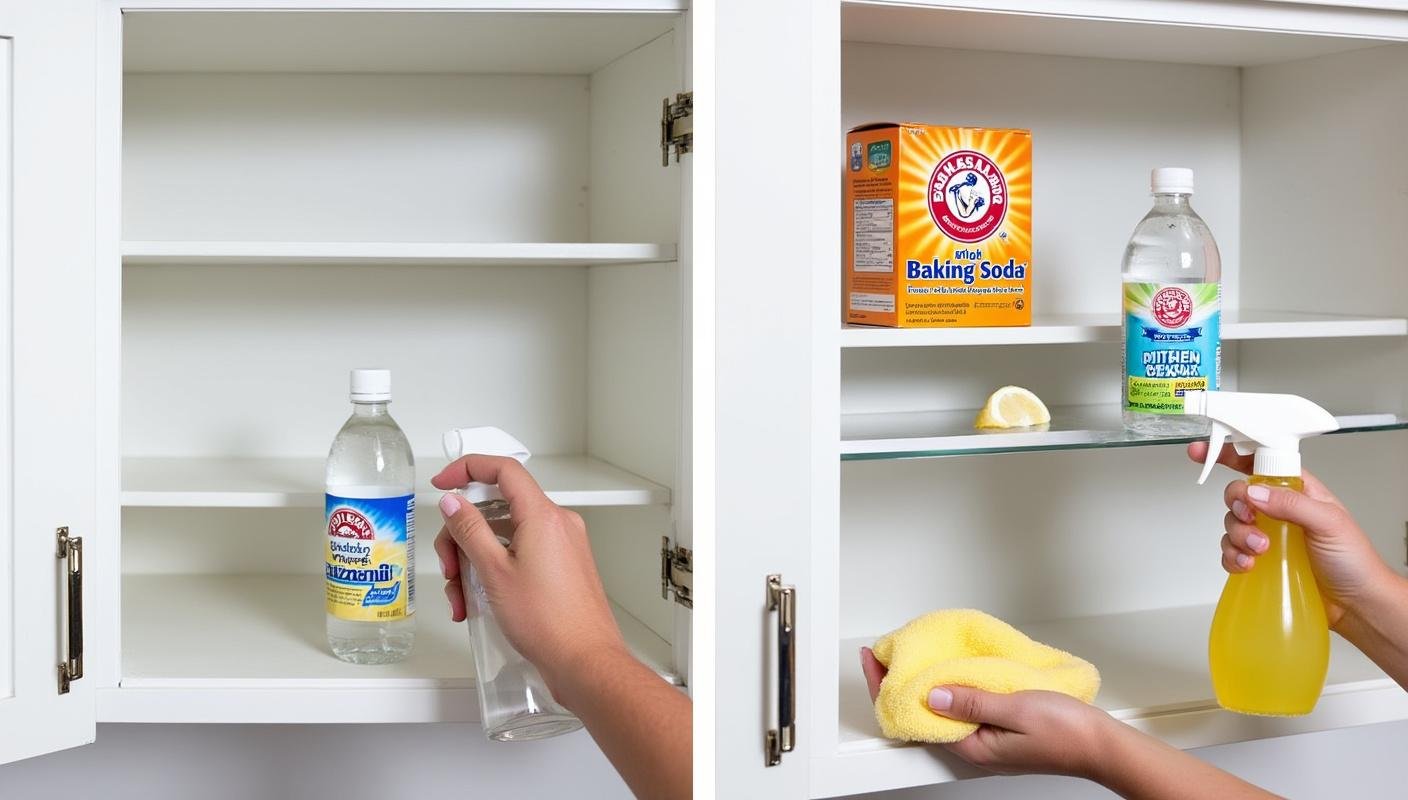
Cabinets are an essential part of our home organization, but they can also harbor unpleasant odors that seem almost impossible to eliminate. Recently, a simple yet effective method has been gaining attention for its ability to completely remove unwanted smells from cabinets without the need for expensive products or harsh chemicals. This approach relies on nothing more than three common ingredients and a quick application process that yields surprising results.
The combination of baking soda, white vinegar, and lemon juice not only neutralizes odors but also cleanses the interior of your cabinet thoroughly. Baking soda acts as an odor absorber, while white vinegar loosens grease particles and helps eliminate bacteria. The acidity in lemon juice provides a refreshing scent that can effectively counteract unpleasant smells.
Using this method is straightforward: simply sprinkle baking soda over the shelves, let it sit for 30 minutes to allow odors to be absorbed, followed by a spray of white vinegar that fizzes on contact with the baking soda and loosens grease. Finally, wipe everything clean with lemon juice for an instantly fresh scent. This process not only makes your cabinets smell great again but also prevents future odor buildup.
The affordability of these ingredients is particularly appealing: you likely already have them in your kitchen cupboard. In addition to its effectiveness, this method is environmentally friendly and safe to use without harmful chemicals. It’s a simple yet smart solution for any household that wants to keep their cabinets clean and fresh without breaking the bank.
The Power of Baking Soda
Baking soda has long been known as an effective odor absorber due to its properties as a mild base with alkaline properties. When you sprinkle baking soda over your cabinet shelves, it binds to volatile organic compounds (VOCs) responsible for unpleasant odors. This makes it ideal for removing grease and food smells that accumulate inside cabinets.
The method works well because baking soda is not only inexpensive but also safe to use in combination with other natural ingredients like white vinegar and lemon juice. After application, allow the baking soda to sit for 30 minutes so that the odor molecules can be fully absorbed before proceeding to the next steps of cleaning.
It’s important to note that this technique is most effective when applied regularly, such as every three months or after a particularly messy cooking session in your kitchen. Preventing odors from returning is essential: grease and dust particles continue to accumulate, which eventually leads back to unpleasant smells if not properly removed. With the right ingredients and patience, you can keep your cabinets fresh for longer without relying on expensive products.
The Role of White Vinegar
White vinegar plays a crucial role in this method by loosening grease residues that often contribute to persistent odors. Its acidity helps break down dirt particles that baking soda cannot reach on its own. This makes the combination effective against stubborn smells caused by fatty foods, oils, and other substances.
The application process involves spraying white vinegar over the shelves after sprinkling baking soda. The reaction between these two ingredients creates a fizzing effect that not only loosens grease but also provides additional odor neutralization. It is important to work in well-ventilated areas during this step because of the strong fumes.
Lemon juice, which serves as the final cleaning agent, complements vinegar’s deodorizing and degreasing action by leaving a fresh scent behind. This makes the entire process not only practical but also pleasant to use. After rinsing your shelves with clean water and drying them thoroughly, you will notice that unwanted odors have largely disappeared.
The effectiveness of white vinegar is well documented; it is often recommended in cleaning circles as an environmentally friendly alternative for grease removal without harsh chemicals. Its versatility makes it a valuable ally in household cleaning tasks beyond removing smells from cabinets.
The Fresh Scent with Lemon Juice
Lemon juice serves not only as a final rinse but also as the fragrance that gives your freshly cleaned cabinet its new scent. This natural ingredient has been shown to have deodorizing and disinfecting properties, which makes it an ideal addition in cleaning processes where odor neutralization is essential.
During application, be sure to use fresh lemon juice without additives or preservatives for optimal results. The acidity helps remove any remaining grease particles and closes pores on the surfaces of your shelves, making them less susceptible to future odors.
The combination of baking soda and vinegar provides a strong foundation against unpleasant smells; adding lemon juice ensures that, in addition to odor elimination, you are also left with an invigorating aroma. This makes cleaning more pleasant and increases motivation for regular maintenance that keeps unwanted smells at bay.
A Simple Three-Step Process
Using these ingredients is straightforward: sprinkle baking soda evenly over your shelves before letting it sit for half an hour. This method not only leaves your cabinets smelling fresh but also extends their lifespan. Regular application prevents grease and dust buildup, which can lead to unpleasant odors. For example, a recent study shows that households that use this method have less frequent complaints about unpleasant smells in their cabinets. Therefore, it is advisable to incorporate this technique into your cleaning routine.